
Ontario is facing an affordability and supply crisis. With increasing demand, rising prices and housing starts down significantly, the Ontario Real Estate Association argues that the province must look to alternative methods to meet its housing targets.
In a new report, Building More, Building Faster, OREA advocates for factory-built housing—commonly referred to as modular or prefabricated—as a key part of the solution.
Addressing affordability and supply challenges
It’s no surprise that Ontarians are losing confidence in the dream of homeownership. Citing a a recent, the association notes that “nearly half of aspiring homeowners have either given up believing they will ever own a home (25 per cent) or are pessimistic about the possibility (24 per cent).”
OREA connects this sentiment to long-standing regulatory and supply issues. OREA’s report points to lengthy municipal approval processes, zoning restrictions and a shortage of developable land and skilled trades as contributing factors. The report argues that unless “dramatic steps are taken,” affordability challenges will continue to worsen.
What is factory-built housing?
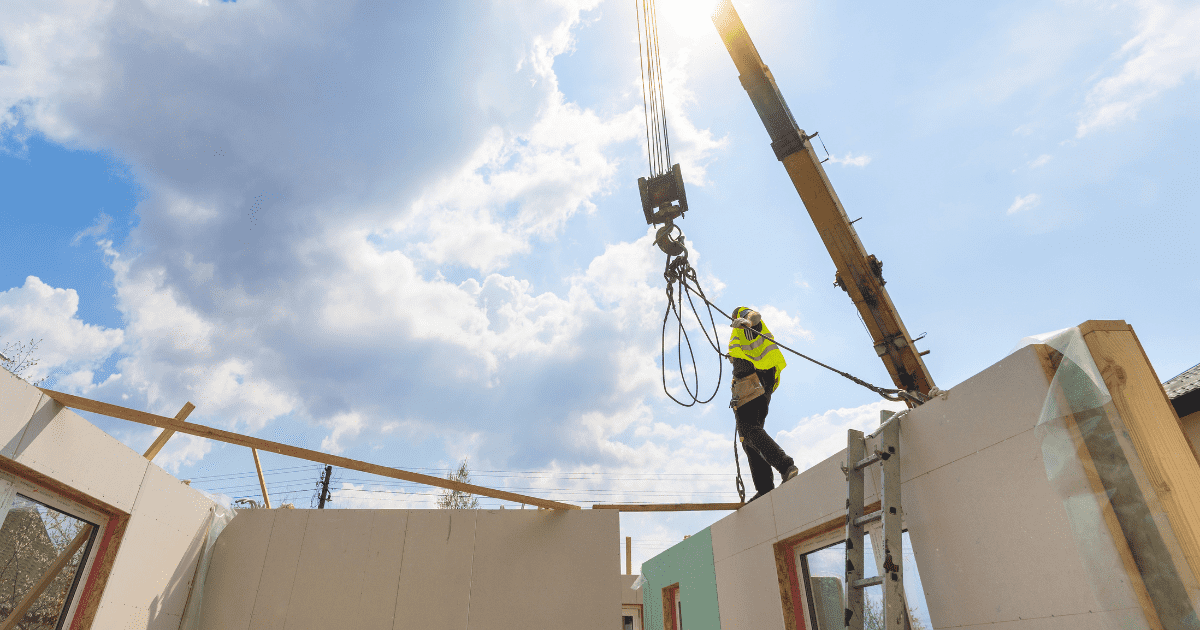
OREA uses the term “factory-built” to describe housing that is partially or entirely manufactured off-site and then transported to its final location for assembly. This includes modular, panelized and kit homes, as well as fully manufactured mobile homes.
The association claims these construction methods can significantly reduce build times. “Modular building techniques have shown a 20–50 per cent reduction in construction time without compromising quality,” the report states, citing research from McKinsey & Company.
These homes, according to OREA, can be built to match local architectural styles, accommodate multi-unit residential formats and are certifiable under national building standards.
Adoption across Ontario and beyond
OREA highlights several Ontario municipalities that have adopted modular housing initiatives. The City of Toronto’s Modular Housing Initiative, for instance, has built more than 200 affordable units using this approach. Peterborough constructed 50 tiny homes in seven months as part of its Modular Bridge Housing Project. In London, a hybrid modular-traditional method was used to accelerate a 61-unit affordable housing build.
Federal investment has also supported factory-built housing. Canada’s Rapid Housing Initiative (RHI) has contributed to more than 15,000 new units nationwide since 2020, many of which used modular construction.
Economic and environmental considerations
OREA positions factory-built housing as both a construction solution and an economic development opportunity. The report cites Premier Doug Ford’s February 2025 pledge to invest $50-million in prefabricated housing and building technologies. OREA believes that this growing sector could “create jobs, boost Ontario’s economy, and be exported to other provinces/regions with scale and standardization.”
The report also argues that factory-built housing can support environmental goals and explains this method can reduce material waste, improve energy efficiency through precision manufacturing and align with Ontario’s greenhouse gas reduction targets.
Potential benefits for aging populations
Factory-built housing could also play in addressing the needs of Ontario’s aging population. The association cites projections from the Ministry of Finance that seniors aged 65 and older will account for a significant portion of the population by 2046 and suggests that factory-built housing could enable the rapid development of accessible, “ground-oriented” communities for seniors, potentially easing demand pressures in the broader resale market.
Challenges to scaling up
While OREA sees promise in factory-built housing, it also identifies several barriers to adoption. These include inconsistent definitions across municipalities, outdated regulations and limited public awareness.
For example, the report notes that some bylaw officers classify modular homes as mobile homes, leading to additional zoning requirements. It also highlights the “spring thaw” road restrictions under Ontario’s Highway Traffic Act, which temporarily limits the transportation of heavy loads—impacting the delivery of prefabricated modules.
OREA argues that these issues create delays and discourage investment in the sector.
5 policy recommendations
To support broader adoption, OREA outlines five key policy recommendations:
- Create a standardized definition of factory-built housing: The report calls for a uniform definition across provincial and municipal levels to reduce confusion and align regulatory frameworks.
- Pursue cross-provincial collaboration: OREA recommends that Ontario lead efforts to create national standards for factory-built housing and its transportation.
- Reduce regulatory barriers: Suggestions include aligning CSA standards with the Ontario Building Code, streamlining permit processes and creating pre-approved blueprints.
- Invest in public-private partnerships (P3s): The association proposes a P3 model to build 5,000 to 10,000 factory-built homes annually using surplus government land and standardized designs.
- Amend the Highway Traffic Act: OREA recommends exempting factory-built modules from “spring thaw” load restrictions, arguing that current rules delay construction unnecessarily.
OREA concludes that factory-built housing has the potential to change the housing landscape in the province. “By creating favorable conditions for investment and reducing regulatory barriers, Ontario can drive rapid growth, boost employment, increase supply, and unlock new economic opportunities.”

