
When evaluating real estate investment opportunities in suburban and urban fringe markets, considering the distinctions between master-planned communities and conventional subdivisions is critical. While both options offer potential for residential development, they differ substantially in design philosophy, infrastructure, amenities, regulatory oversight, and ultimately, investment risk and return profiles. For investors seeking to maximize long-term value, these differences can influence both acquisition strategies and portfolio performance.
Comparing Approaches
A master-planned community (MPC) is a large-scale residential development that is carefully designed from inception to integrate housing, commercial spaces, recreational facilities, and essential infrastructure. These communities typically encompass hundreds to thousands of residential units and are built around a cohesive vision that prioritizes walkability, accessibility, aesthetic continuity, and long-term growth. Developers often retain control over zoning, landscaping, and community governance to ensure the project adheres to its planned vision over time.
A conventional subdivision, on the other hand, is generally smaller in scale and developed incrementally. In many cases, builders purchase parcels of land individually or sequentially, constructing homes based on existing zoning regulations rather than a broader master plan. While these subdivisions may offer attractive housing options, the community may lack coordinated amenities, aesthetic cohesion, or comprehensive infrastructure planning. As a result, the overall appeal and long-term appreciation potential may vary more widely compared to MPCs.
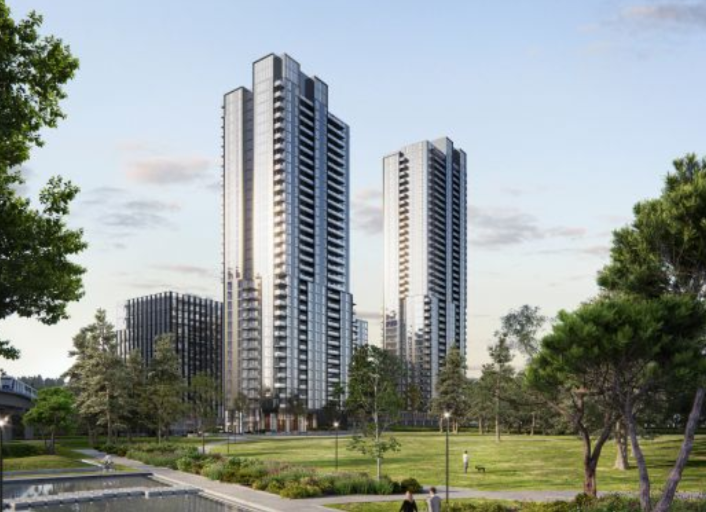
Century City Holland Park is a master-planned community in Surrey
Development and Infrastructure
Infrastructure planning is one of the most significant differentiators between MPCs and conventional subdivisions. Master-planned communities invest heavily in roads, utilities, drainage, and public spaces before the first homes are built. The upfront investment ensures that residents have consistent access to transportation networks, utility services, and community facilities. Moreover, MPCs frequently incorporate sustainable design features, such as stormwater management systems, green spaces, and pedestrian-friendly pathways, which enhance property value and reduce long-term maintenance risks.
Conventional subdivisions, in contrast, often develop infrastructure in phases, sometimes leading to inconsistencies in quality or service availability. Roads may be narrower, utility connections may be less reliable, and public amenities may be limited or delayed until subsequent phases are completed. This can translate into higher post-purchase maintenance costs or lower initial property appeal, especially if the surrounding community lacks complementary services.
Amenities and Community Features
One of the hallmarks of master-planned communities is their comprehensive suite of amenities. These developments often include parks, recreational facilities, shopping areas, schools, and even employment hubs, all integrated within the community layout. Amenities are designed not only to improve residents’ quality of life, but also to create a sense of identity and exclusivity, which can translate into higher property values and faster absorption rates in the housing market.
Conventional subdivisions tend to offer fewer integrated amenities. Developers may provide basic green spaces or community playgrounds, but large-scale recreational, commercial, or educational facilities are typically external to the subdivision or added only after significant demand arises. For investors, this means conventional subdivisions may rely more heavily on external infrastructure to support growth, potentially slowing resale or rental uptake in the short term.

Mattamy’s master-planned community, The Laurels, in set in Milton
Design and Architectural Consistency
Master-planned communities emphasize cohesive design principles, including architectural styles, landscaping, and street layouts. This uniformity fosters a visually appealing environment that attracts buyers seeking a well-maintained, aesthetically consistent neighbourhood.
In conventional subdivisions, architectural and landscaping guidelines are usually less strict. Homes may vary in style and quality, and street layouts may be more utilitarian than aesthetically planned. While this can allow for more flexibility in construction and customization, it may also lead to uneven property values and slower market appreciation, particularly in subdivisions without strong local governance or community standards.
Investment Implications
From an investment perspective, master-planned communities often present lower risk and potentially higher returns, especially for long-term investors. The coordinated planning, integrated amenities, and architectural consistency typically support stronger property appreciation, higher resale values, and consistent rental demand. Additionally, the presence of commercial spaces and community hubs can create a built-in population base, sustaining local property markets even during broader economic downturns. However, performance is still influenced by regional demand and broader market conditions.
Conventional subdivisions, on the other hand, often come with lower entry costs, making them more accessible for first-time buyers or investors working with smaller budgets. These areas can provide opportunities for investors to strategically acquire properties in emerging neighbourhoods before prices rise, or to identify undervalued or distressed homes that can be renovated and sold at a premium. By carefully selecting properties with renovation potential or positioning themselves in areas showing early signs of growth, investors can achieve a high return on investment while benefiting from the more flexible pricing often found in traditional subdivisions. However, this approach carries greater uncertainty regarding community appeal, long-term property values, and maintenance costs.
Risk Considerations
It is important to weigh several risk factors when comparing the two approaches. In master-planned communities, risks include the potential for large-scale development delays, higher initial acquisition costs, and dependency on the developer’s ability to execute the overall plan. On the other hand, conventional subdivisions face risks related to uneven infrastructure, limited amenities, and market absorption challenges, which can affect property liquidity and appreciation.
Additionally, regulatory and planning oversight can influence risk profiles. MPCs often involve complex permitting processes and long-term compliance with zoning agreements, while conventional subdivisions may face fewer regulatory hurdles but offer less predictability in terms of growth and municipal investment.
Both types, however, are still subject to local building codes and zoning regulations.
Balancing Stability and Flexibility
Choosing between master-planned communities and conventional subdivisions ultimately comes down to investment goals and risk tolerance. Master-planned communities offer stability, long-term appreciation, and integrated amenities, while conventional subdivisions provide lower entry costs and flexible growth opportunities. In both cases, careful analysis of local markets, infrastructure, and regulatory factors is key to making informed, strategic real estate decisions.