
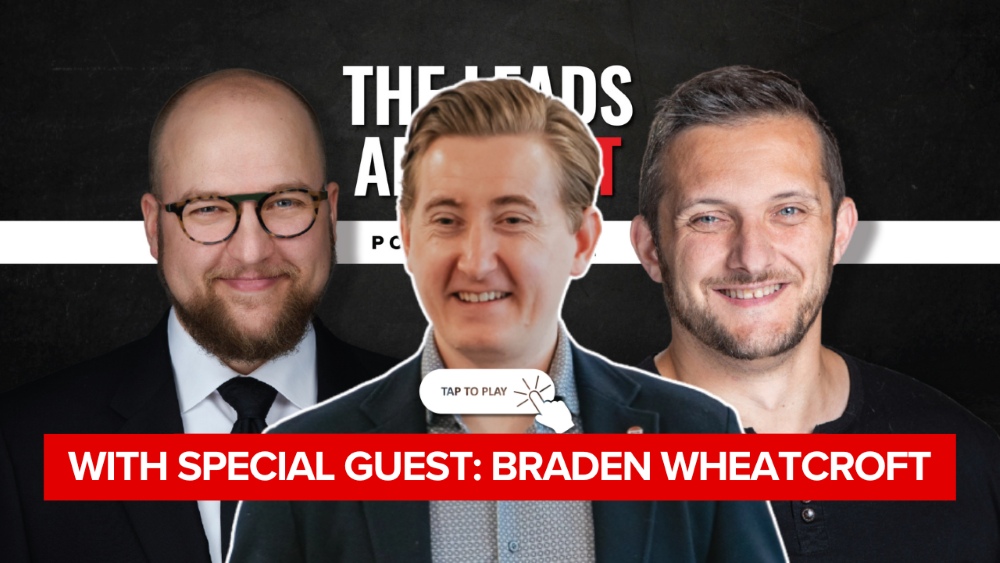
Realtors often measure success in deals and awards. But too many discover that hitting those milestones comes at the expense of their health, relationships, or happiness.
That’s where Braden Wheatcroft offers a different perspective. As a broker-owner of multiple Re/Max offices on Vancouver Island and a longtime coach with Richard Robbins International, he has helped launch the careers of more than 200 agents. His message: growth is good, but only if it supports the life you want to live.
In his conversation on The Leads Are Sht Podcast*, Wheatcroft laid out frameworks and practical advice for building a sustainable business. Here are the highlights.
Want to hear the whole conversation? Scroll to the bottom for the replay.
Experience is about mileage, not years
Clients don’t care how long you’ve been licensed. They care about your actual mileage. If the average Realtor sells four homes a year and you sell 16, you’ve built four years of experience in one. Wheatcroft encourages newer agents to frame it that way with clients—it builds confidence and credibility fast.
The sophomore slump is real
Year one is often easier than year two. That’s because agents have been “pre-marketing” to their network while getting licensed. By year two, that warm list is gone. Many agents hit a wall here. The solution: put real systems in place to keep your pipeline full.
Leads vs. conversion
Wheatcroft makes it clear with his Five-Part Flywheel, which shows where businesses leak energy:
- Lead generation
- Lead conversion
- Client experience
- Transaction management
- Post-sale service
The goal is to track ratios at each stage and improve them over time. For example, how many leads turn into consultations? How many consultations turn into clients? How many clients actually close? Most agents never measure this and lose opportunities as a result.
Research vs. decision phase clients
Not every lead is ready to buy or sell today. Wheatcroft distinguishes between:
- Research phase clients, who are exploring options and may be six to 24 months away.
- Decision phase clients, who are ready to act now.
If you treat a research client like a decision client, you’ll come across pushy and tone deaf. If you treat a decision client like they’re still researching, you’ll seem aloof and inattentive. The key is to quickly identify which stage someone is in and tailor your service to match.
Define success on your own terms
Chasing bigger awards and higher deal counts won’t necessarily make you fulfilled. Wheatcroft recommends setting anti-goals: rules that protect what matters most to you.
“I want to sell 100 homes, but not at the expense of missing my kids’ sports or ignoring my health.”
His Financial Fulfillment Formula looks beyond commissions and awards:
- Your ideal lifestyle cost
- Your future savings goals
- Taxes
- Giving back
- Your ideal business structure
This creates a target that’s about more than trophies.
Eliminate, automate, delegate
Wheatcroft’s “Breakthrough Method” helps agents buy back their time:
- Eliminate what doesn’t matter.
- Automate repetitive tasks.
- Delegate draining work to others.
For example, don’t load all short-form video work onto an assistant who isn’t trained for it. Instead, hire a fractional video editor who owns the process for a few hours a week.
The bottom line
Success in real estate isn’t just about how many homes you sell. It’s about building a business that lets you thrive in every area of your life. Wheatcroft’s advice is a reminder that growth without balance is just another form of burnout.
Watch the full episode of The Leads Are Sht Podcast* below for the complete conversation: