

Buyer confidence is slowly returning, and with it come more competitive buying conditions. That, combined with rising home prices, means that more homebuyers may go over budget when purchasing their dream home.
In the National Association of Realtors’ latest home price report, median home prices in 170 metro markets (out of 228) posted year-over-year increases. The Northeast and Midwest experienced the largest price gains, rising by 6.1% and 3.5% respectively.
Is it possible for buyers to find a home within their budget? That depends. According to a recent Zoocasa survey of over 1,000 respondents, one in four American homeowners paid a higher price than planned. However, it was higher-income households that were most likely to exceed their original budget.
Homebuyers Are Sacrificing on Price, But Not Location
The most significant compromise 26.5% of homeowners had to make when buying their home was paying a higher price than they planned for. This was especially true for higher-income households.
Thirty-five percent of homeowners with a household income above $100,000 paid a higher price than planned, compared to 29.7% of homeowners with a household income between $50,000 and $99,000. Just 18.3% of homeowners with a household income below $50,000 exceeded their original budget.
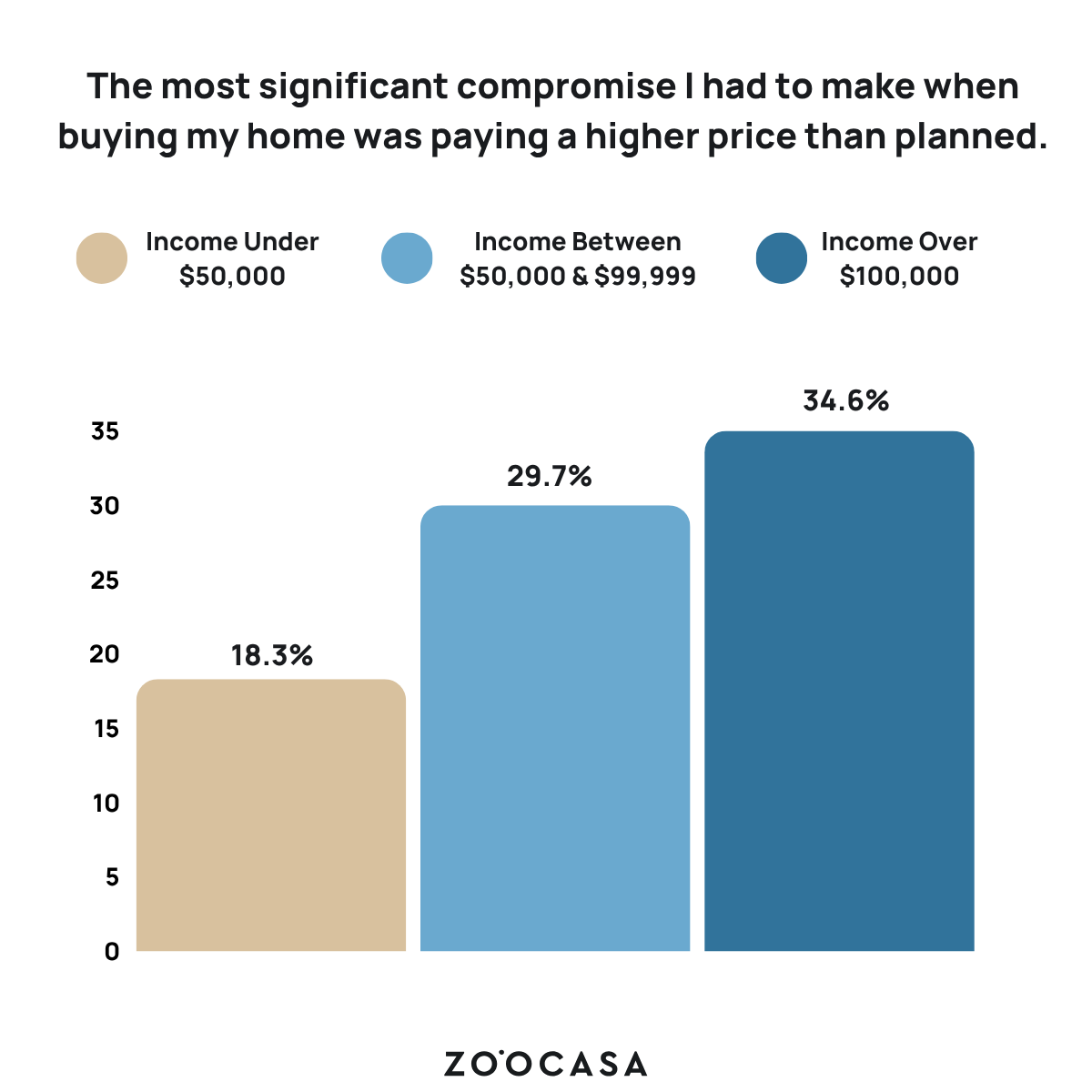
This is understandable as lower-income households must adhere to stricter budgets to avoid overextending themselves or becoming house-poor. On the other hand, higher-income households don’t have to worry as much about overspending and can generally be more flexible with their home search.
The other compromises homebuyers had to make when buying a home were that the home required renovations (19.7%), was smaller in size than expected (11.7%), and had a longer commute (9.7%).
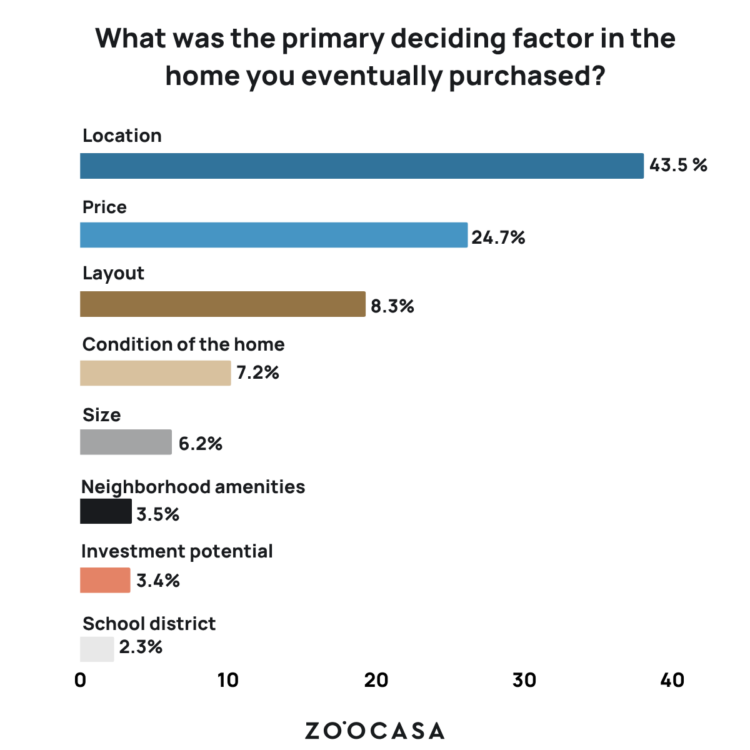
One reason buyers are willing to overspend on a home is that, for many, living in a good neighborhood is worth the price. Nearly half of respondents (43.5%) said location was the primary deciding factor in the home they purchased. Price was not as influential, with just one-quarter of respondents saying it determined their choice. Other factors, like layout, condition, and size of the home, were even less important, reinforcing the idea that in real estate, it’s all about location, location, location.
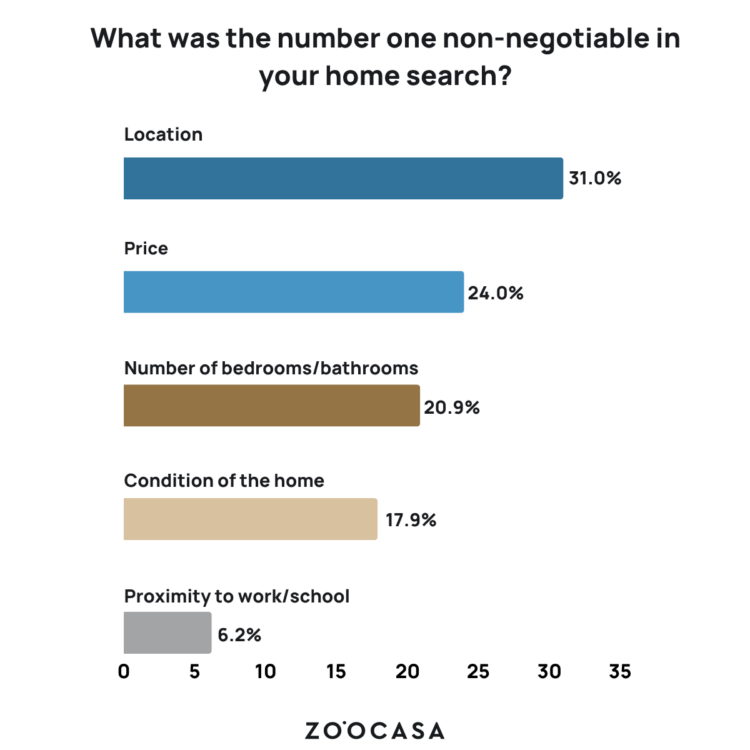
Similarly, location was cited by 31% of respondents as the number one non-negotiable in their home search. Price was slightly less important, with just 24% of respondents saying it was their number one non-negotiable, followed by the number of bedrooms/bathrooms (20.9%) and condition of the home (17.9%).
Buyers Want Real Estate Agents They Can Trust
Buying a home is not just a financial investment; it’s also an emotional journey. A good real estate agent knows this and will be there to guide homebuyers through the ups and downs of such a big life change.
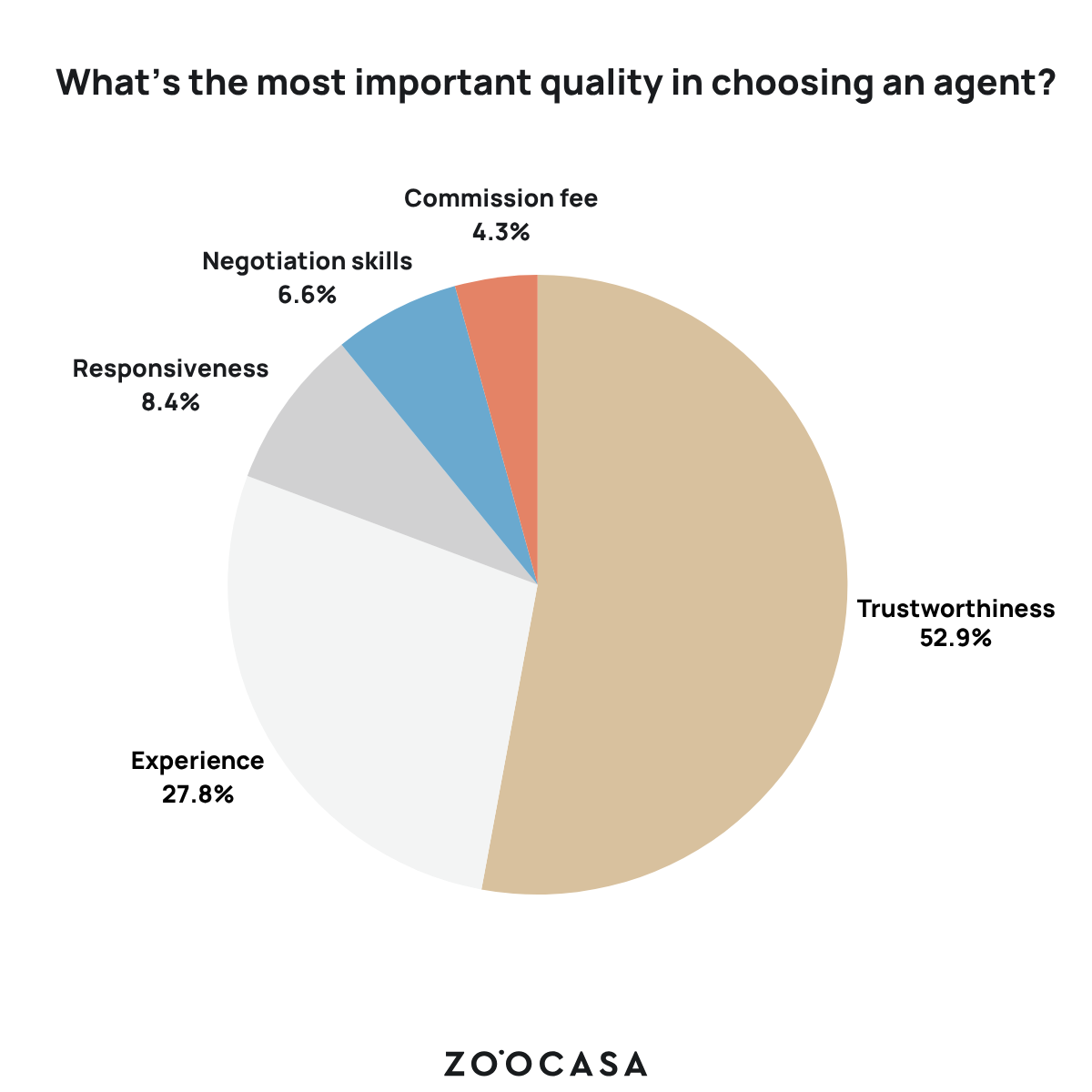
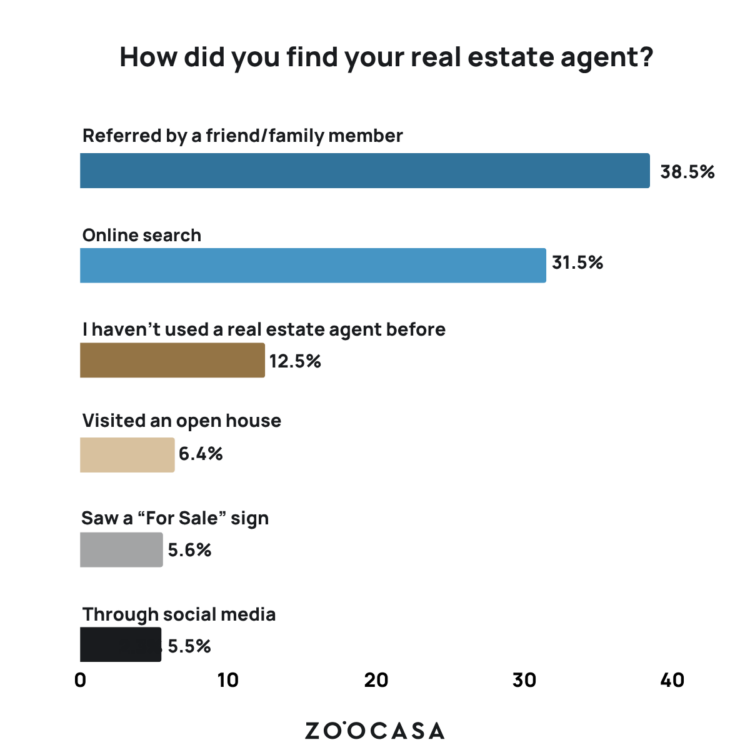
This is why the majority of homebuyers (52.9%) stated that trust was the most important quality for them when choosing a real estate agent, surpassing experience (27.8%), responsiveness (8.4%), and negotiation skills (6.6%). Most home buyers found their agents through either a referral from friends or family (38.5%) or an online search (31.5%).
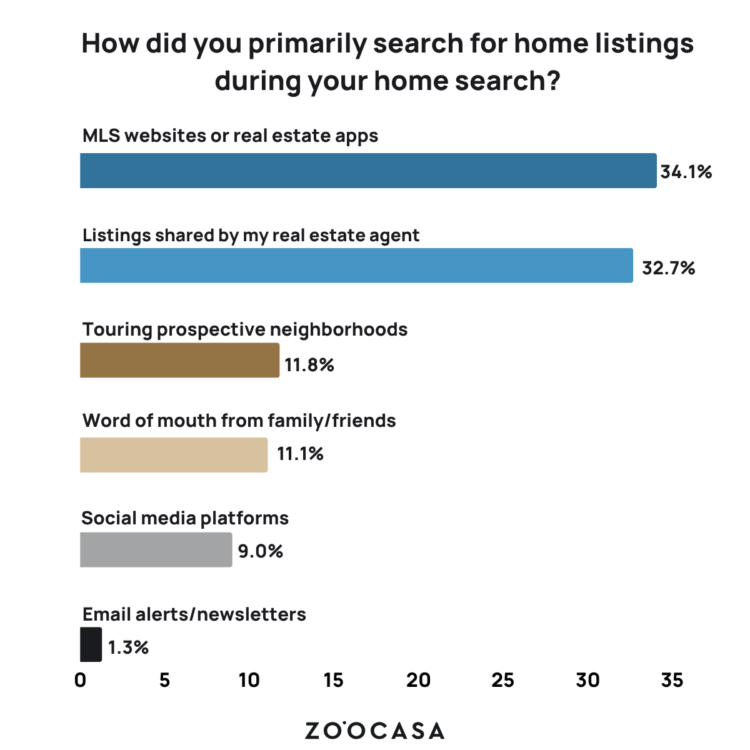
MLS websites and real estate apps were the most useful for buyers, with 34.1% of respondents citing them as their primary method of searching for homes. However, a significant portion of respondents (32.7%) also relied on listings shared with them by their agent, further highlighting the benefit of having a real estate professional by your side.
Despite less than 10% of homeowners primarily searching for listings on social media, the majority agreed it was either somewhat or very important for their real estate agents to promote their home on social media.

Renters Want to Be Homeowners, But High Costs Are Delaying Them
Last year, the number of first-time home buyers shrank to a historic low of 1.1 million. In 2005, there were over 3 million in the market. So where have all the first-time buyers gone?
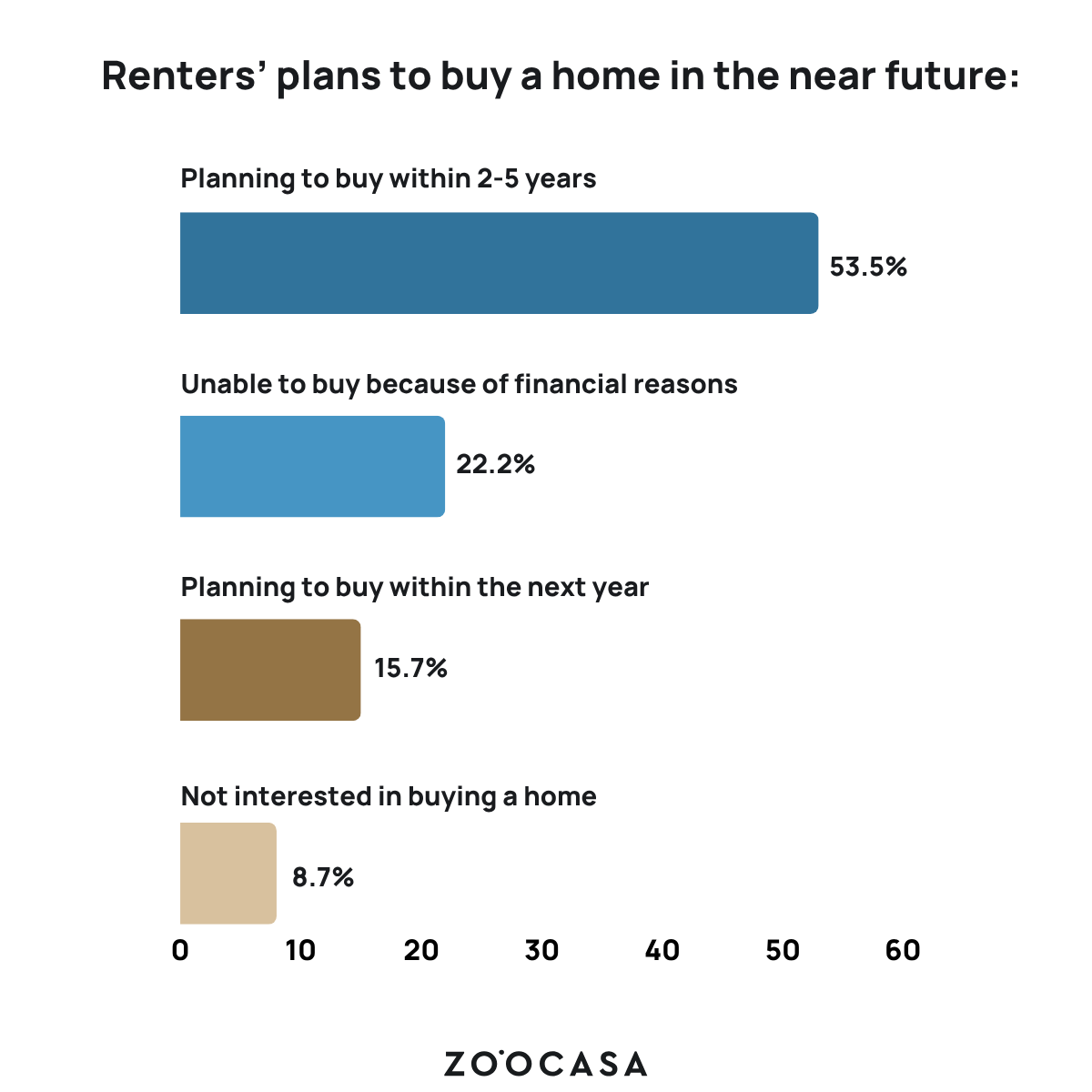
Most renters surveyed said they plan to buy a home in the future, but only 15.7% said they would buy within the next year. Meanwhile, a majority of renters said they weren’t going to buy for another two to five years, and nearly a quarter (22.2%) said financial reasons prevent them from buying a home.
The reasons for the delay are clear. As home prices rise, wage growth stagnates, and borrowing costs remain elevated, renters struggle to climb the property ladder.
As a result, renters are less optimistic about the real estate market than homeowners. The top response from renters on whether current interest rates are fair for first-time buyers was “no, somewhat unfair”. On the contrary, the top response from homeowners was “yes, somewhat fair”. Only 9.3% of renters believe current interest rates are very fair for first-time buyers, compared to 13.4% of homeowners.
Despite this, renters are more concerned about rising home prices than interest rates. Homeowners feel the opposite; interest rates were the primary concern for 38.6% of homeowners, followed closely by rising home prices (37.6%) and economic uncertainty (17.3%).
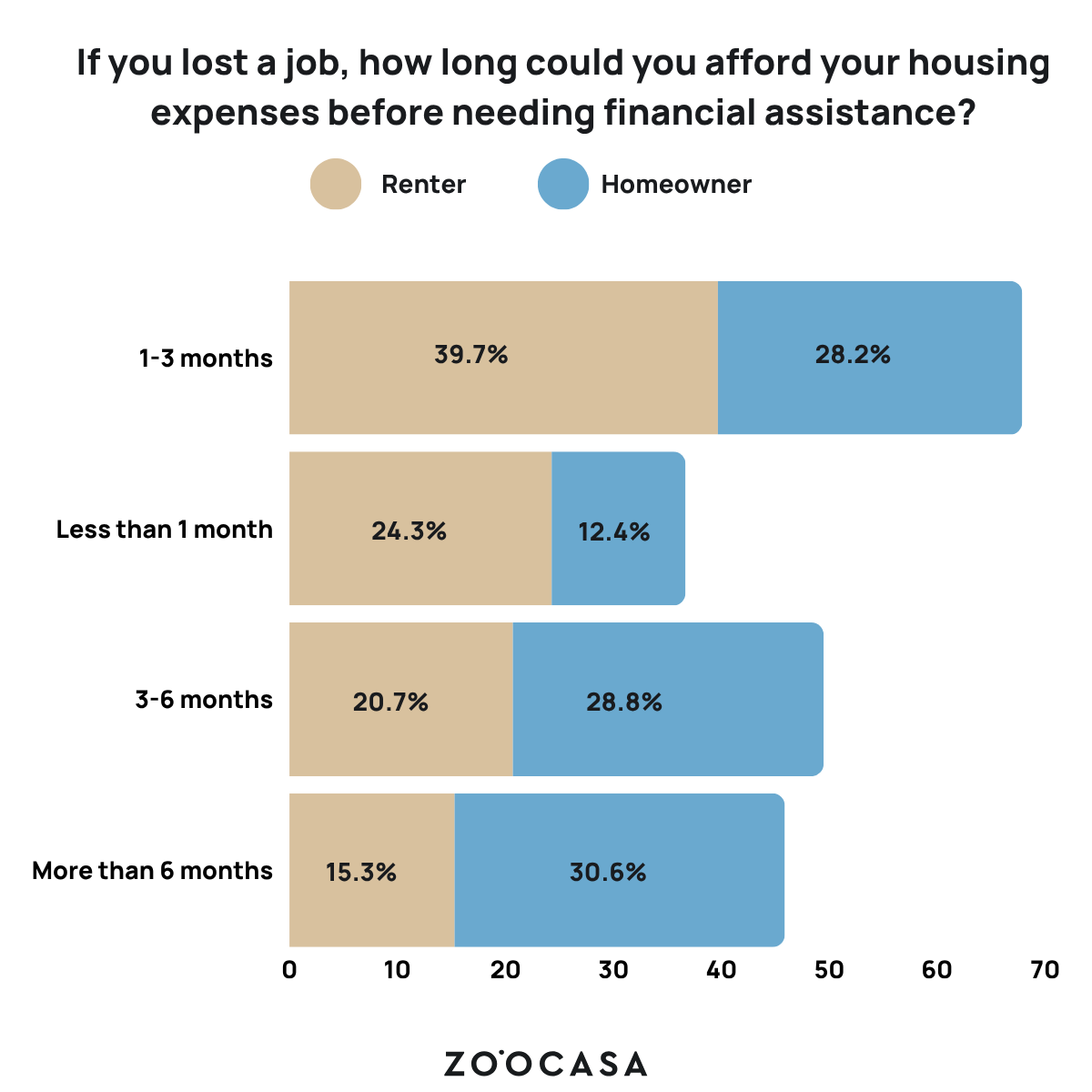
The financial gap between renters and homeowners is also evident in their respective preparedness for an emergency. Nearly 40% of renters could afford their housing expenses for just one to three months if they lost their jobs, and only 15.3% could survive for more than six months. Homeowners are more financially secure; 30.6% of homeowners could afford their housing costs for more than six months, and 28.8% could afford them for three to six months.
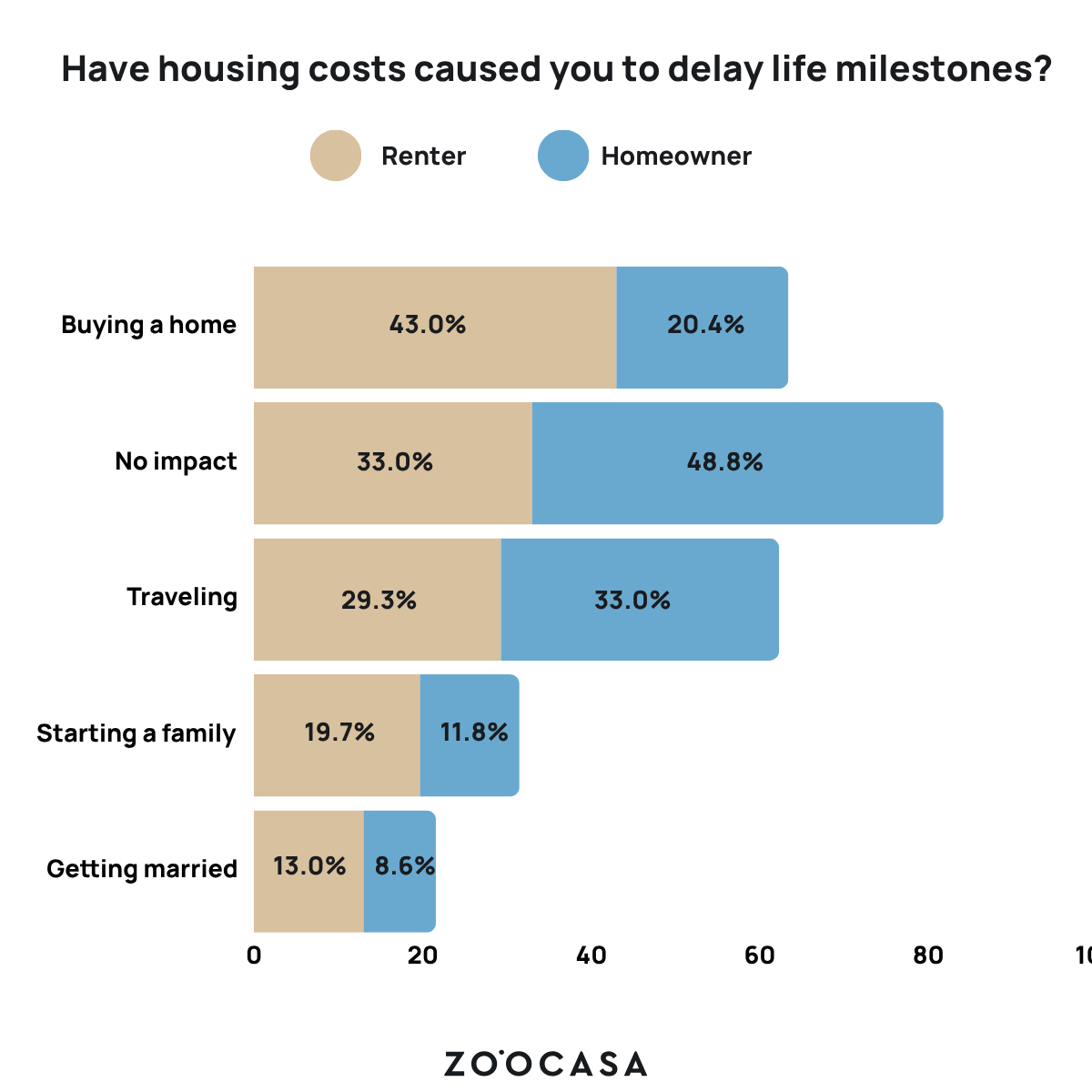
Without first building a solid emergency fund, renters can’t reasonably save for a down payment. Daily life expenses take priority. This is likely why 43% of renters said housing costs have caused them to delay buying a home. In comparison, 48.8% of homeowners said housing costs have not impacted their ability to achieve life milestones.
The Future of Housing in the U.S.
Affordability has been a challenge for homebuyers over the last few years, but the market may finally be shifting. The Federal Reserve recently lowered its benchmark interest rate by 25 basis points, which could, in turn, cause mortgage lenders to lower rates. On top of that, many economists anticipate another cut in December.
In many cities, inventory is also rising, giving buyers an upper hand. But that may not last for long as borrowing costs ease and more buyers enter the market. Prospective homebuyers and sellers should work with a local real estate agent to ensure the best possible outcome.
Are you thinking about buying or selling a home in the near future? Zoocasa has thousands of up-to-date listings near you. Start your search today!
Methodology
The future of housing in the U.S. survey was conducted between April 22, 2025, and October 7, 2025. Over 1,000 American homeowners and renters were surveyed. The survey consisted of 58 multiple-choice questions to learn about the current real estate outlook of Americans. The margin of error is roughly 2%.