
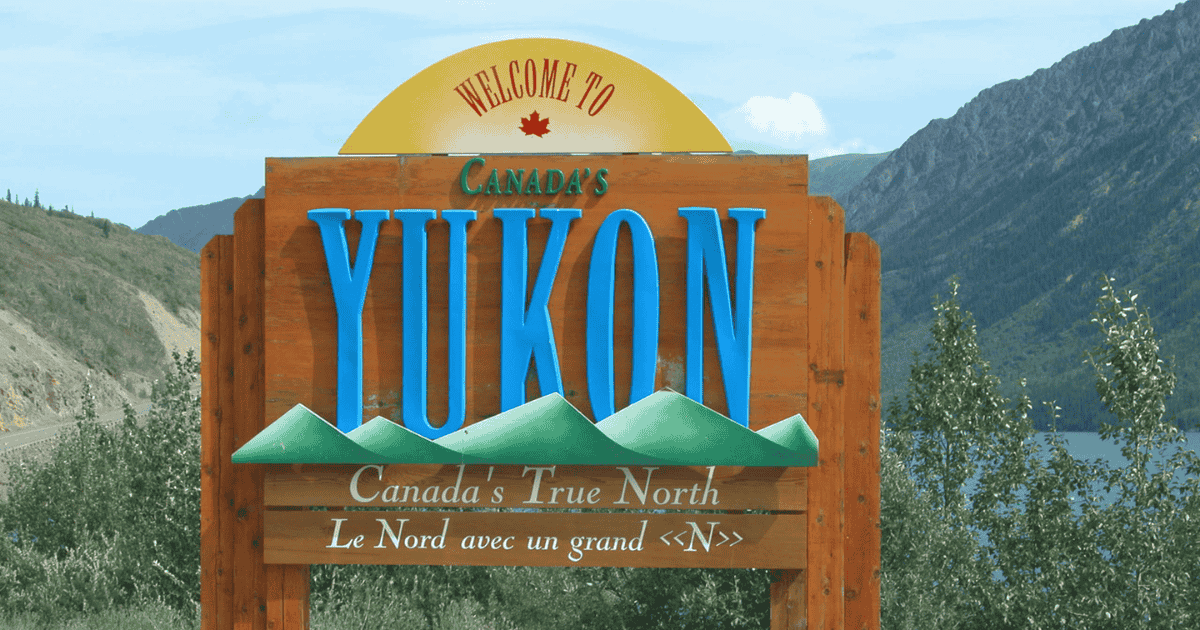
“What a night and what a result!” announced newly elected Yukon Premier Currie Dixon in his victory speech earlier this month.
The Yukon’s recent territorial general election on Nov. 3 saw the long-established Liberal party “obliterated” by Dixon’s right-leaning Yukon Party, to use the terminology of Coldwell Banker real estate agent Jacklyn Stockstill, a former Yukon Real Estate Association director based in the capital city of Whitehorse.
Stockstill — who was among the many unsuccessful Liberal candidates who failed in their bid to represent their constituency — had hoped to leverage her real estate experience to advocate for policies that would strengthen Yukon communities and create more housing options. The Liberals had governed for the past nine years.
But Yukoners ditched the status quo and voted for change.
Housing, affordability and safety top voter concerns
Dixon officially became the territory’s 12th premier on Nov. 22, and the first to have been born and raised there. He has vowed that his majority government will get the territory’s housing market and economy “back on track.” Issues dominating the election campaign included housing affordability and the housing supply shortage; the high cost of living; better access to health care; improving community safety; and cleaning up Whitehorse’s downtown core.
There are “serious challenges ahead,” Dixon said. He believes the Yukon government — which manages a large amount of land in the territory — should “get out of the way” of the private sector and create conditions for the growth of private industry.
“Voters wanted change to address our housing crisis,” he said after his win.
Currently, the Yukon market is highly competitive, with rising costs driven by limited inventory. From what Stockstill has seen from her position on the ground as a Realtor, she agrees the gridlock in the housing and rental markets needs to shift.
Rapid population growth fuels demand
“It’s hard to keep up. Our population is growing but the government isn’t getting enough housing out there.”
Thanks to strong growth in the past couple of years, Yukon’s sparse population — now over 48,000 — has outstripped that of the Northwest Territories for the first time in modern history, according to Statistics Canada.
The bulk of Yukon residents live in Whitehorse, the territory’s only city, with other communities being towns or villages. It has become one of the fastest-growing municipalities in Canada, thanks to international migration; job opportunities, particularly in mining, tourism and government services; and the lure of a desirable frontier-style work-life balance surrounded by unmarred natural beauty.
“People come to visit and wind up staying,” Stockstill says. “It’s magical. Whitehorse is called the wilderness city. There are trails everywhere. You can hike on your lunch break. The summer sun and northern lights are amazing. We have a festival to help get us through the winter. It’s a good community here.”
Land, climate and governance shape development
Almost 25 per cent of the territory’s population is Indigenous. The First Nations’ self-governance agreements grant them significant control over land development. “We’re ahead of most of the rest of the country in that,” Stockstill says. “It’s one of the most unique things about the Yukon.”
Although the climate is subarctic, the weather can be milder than expected in a territory that’s coined the nickname “sourdough” for anyone who has survived a winter there. The term dates back to the Klondike Gold Rush, when prospectors made bread using sourdough starter kept close to their bodies so it wouldn’t freeze. Some of those starter cultures are still alive today, more than 125 years later, passed down through generations.
“Unlike in the Northwest Territories, digging a foundation here isn’t a problem — we can have basements,” Stockstill explains.
Slow land release and high building costs create bottlenecks
But for a host of reasons, developable land is slow to open up. “It takes so long,” says Stockstill, who, as a result, is in the process of working with a builder to facilitate more modular housing.
The building season is brief. Being so remote, everything from food (although subsidized) and utilities to construction costs is high. There is a shortage of tradespeople. Approval processes may be bogged down in red tape. With territorial, First Nations and federal involvement, the market can be complex, with transactions handled via a mix of methods including tenders, fee simple, leasehold and lottery, as seen in high-demand areas like the Whistle Bend development in Whitehorse.
Local Re/Max agent Scott Sauer observes: “There’s an incredible amount of land here — a whole territory.” But freehold land for development isn’t widely available.
Real estate pressures and regulatory shifts
The Realtor community in the Yukon — currently numbering about 60 people and growing, according to the Canadian Real Estate Association — finds itself challenged to come up with what clients want. Average house prices are steep. In Whitehorse, they can exceed $700,000 — higher than in many Canadian communities.
The territorial real estate association’s membership practices made news last year after the organization entered into a consent agreement with the Competition Bureau not to enforce residency requirements on its members. This ruling is expected to open the market to new competitors.
“That created some fuss,” recalls Whitehorse-based Re/Max agent Felix Robitaille. “It’s all dealt with now,” and the Yukon is on its way to having barrier-free trade.
There are also recent changes to Yukon’s Residential Tenancies Act, designed to set a clearer path for ending tenancies.
‘The Yukon is the whole package’
The Yukon is a land of opportunity, Robitaille says. “I live on 25 acres, 10 minutes from downtown. You don’t get that in bigger centres across the country.”
With public administration being the largest single driver of the Yukon economy, Robitaille finds the territory’s social programs and supports for residents second to none. “For lack of a better term, we’re a welfare state.”
Strong demand. High salaries. Steady job opportunities. Relaxed work environment. Great sense of community. Endless daylight in summer. Fierce, profound beauty.
“The Yukon is the whole package,” Robitaille says. “Everything is on steroids here.”


Susan Doran is a Toronto-based freelance writer who has been contributing to REM since its very first issue.